Why is it that each morning seems to unveil a new surprise since I turned 45? One day, it's a twinge in my hip from an intense workout, and another day, it's an unexpected pang in my knee navigating a steep slope. After finding relief with medicinal mushrooms for night sweats and brain fog during menopause, I thought I had unlocked their full potential. Little did I know, my journey was just beginning. As the founder of
West Wolf Medicinals, I firmly believe in the power of nature's remedies, especially when it comes to aging gracefully. These years have heightened my awareness of the changes our bodies face, emphasizing the importance of effective, natural support systems. Enter
medicinal mushroom supplements, particularly Lion’s Mane — a remarkable ally in transforming our approach to aging while delivering a wealth of health benefits.
Here’s what I discovered about how
medicinal mushroom extracts contribute to healthy aging.
The Power of Lion’s Mane for Aging Healthy
As we age, our immune system naturally does as well. We become more susceptible to infections, vaccinations become less effective, and the risk of developing immune-related disorders such as autoimmune diseases increases. Additionally, we develop more inflammatory processes, linked to a decline in health and vitality.
A
new study reveals that immune resilience, a person’s ability to maintain a robust, youthful immune system, plays a critical role in promoting long-term health and extending life. By analyzing data from over 17,000 individuals, researchers found that immune resilience, particularly involving the TCF7 gene, protects against chronic inflammation, immunosenescence, and cell death.
Individuals in midlife with high immune resilience had a 69% lower mortality rate and a biological age advantage of up to 15 years. Not a small amount of time added to one’s lifespan!
New Discovery — Aging Markers Show the Importance of Inflammation
A
new gene marker study examined millions of cells and discovered markers for aging.
“We were able to identify specific genes for each type of immune cell that are involved in important immunological processes and whose activity changes during the aging process. These serve as marker genes for the respective immune cell type and as a reference in the subsequent application of the model,” explains Dr Yang Li.
“Incidentally, the genes we identified play a decisive role in the development of inflammatory processes. It is well known that aging processes are particularly associated with inflammatory processes. We were able to confirm this once again with our study.”
Medicinal Mushroom Supplements and Aging Healthy
Lion’s Mane and Cordyceps are powerhouse
mushroom supplements when it comes to immune support. Packed with immune-boosting polysaccharides like beta-glucans, they help activate key defenders like macrophages and natural killer cells — your body’s frontline soldiers against illness. These compounds strengthen your immune response, helping fend off infections more effectively.
But it doesn’t stop there. Both Cordyceps and Lion’s Mane also have powerful anti-inflammatory properties that help keep chronic inflammation in check — a major factor behind weakened immunity and long-term health issues like heart disease, diabetes, and cancer.
Plus, these mushrooms are friends of your gut. A healthy gut microbiome is essential for a strong immune system, and medicinal mushrooms support beneficial bacteria and strengthen the gut lining to keep unwanted invaders out of your bloodstream. It’s a triple-threat: boosting immune function, reducing inflammation, and supporting gut health — all in one natural supplement.
Let’s take a look at one of the most important mushrooms with a specialty for benefiting your brain.
Lion’s Mane for Mental Clarity
Research suggests that Lion's Mane mushroom may improve cognitive function and mood. A study on young adults found that a single dose of Lion's Mane improved performance speed on a Stroop task, and 28-day supplementation showed a trend toward
reduced subjective stress. Some studies have observed
improvements in cognitive scores in older adults with mild cognitive impairment after Lion's Mane supplementation.
Cognitive Support and Neurodegeneration Prevention
Emerging research suggests that lion’s mane may help preserve cognitive function and slow the progression of neurodegenerative diseases.
In a clinical trial, older adults with mild cognitive impairment who took Hericium erinaceus supplements for four months showed significant improvements in cognitive test scores compared to those taking a placebo. However, these gains diminished once supplementation stopped, indicating that consistent use may be key for long-term benefits.
Animal studies have also found that lion’s mane can reduce the buildup of beta-amyloid plaques—proteins closely associated with Alzheimer’s disease. In lab settings, lion’s mane has been shown to boost levels of nerve growth factor (NGF), which plays a crucial role in neuron health and function. While early results are promising, more robust human clinical trials are necessary to confirm lion’s mane’s effectiveness in protecting the brain and preventing dementia.
Mood Support: Potential to Ease Anxiety and Depression
Lion’s mane is also being studied for its potential role in supporting mental health. Chronic inflammation and impaired neurogenesis have been linked to mood disorders like anxiety and depression, areas where lion’s mane may offer support.
- In a small study involving Japanese women experiencing menopausal symptoms, participants who consumed lion’s mane extract for four weeks reported reduced levels of anxiety and stress compared to those taking a placebo.
-
Lab research suggests that lion’s mane may influence key neurotransmitters involved in mood regulation, such as serotonin and dopamine. Its anti-inflammatory properties may also help combat stress-induced oxidative damage in the brain.
While these early findings point to a potential natural tool for mental clarity, more extensive research is needed to evaluate how lion’s mane compares to conventional antidepressants.
Enhancing Nerve Regeneration and Repair
One of the most studied aspects of lion’s mane is its potential to promote nerve regeneration, particularly in cases of nerve injury or degenerative diseases. Animal research has shown that lion’s mane extract can stimulate nerve repair following traumatic injuries to the peripheral nervous system. In vitro studies suggest that erinacines found in lion’s mane can cross the blood-brain barrier, making them potential candidates for treating central nervous system disorders.
Conditions being explored for lion’s mane intervention include:
- Stroke recovery
- Parkinson’s disease
- Huntington’s disease
- Multiple sclerosis
- Nerve injuries from trauma or surgery
If confirmed through larger-scale clinical trials, Lion’s Mane could become an important supplement for neurorehabilitation therapies.
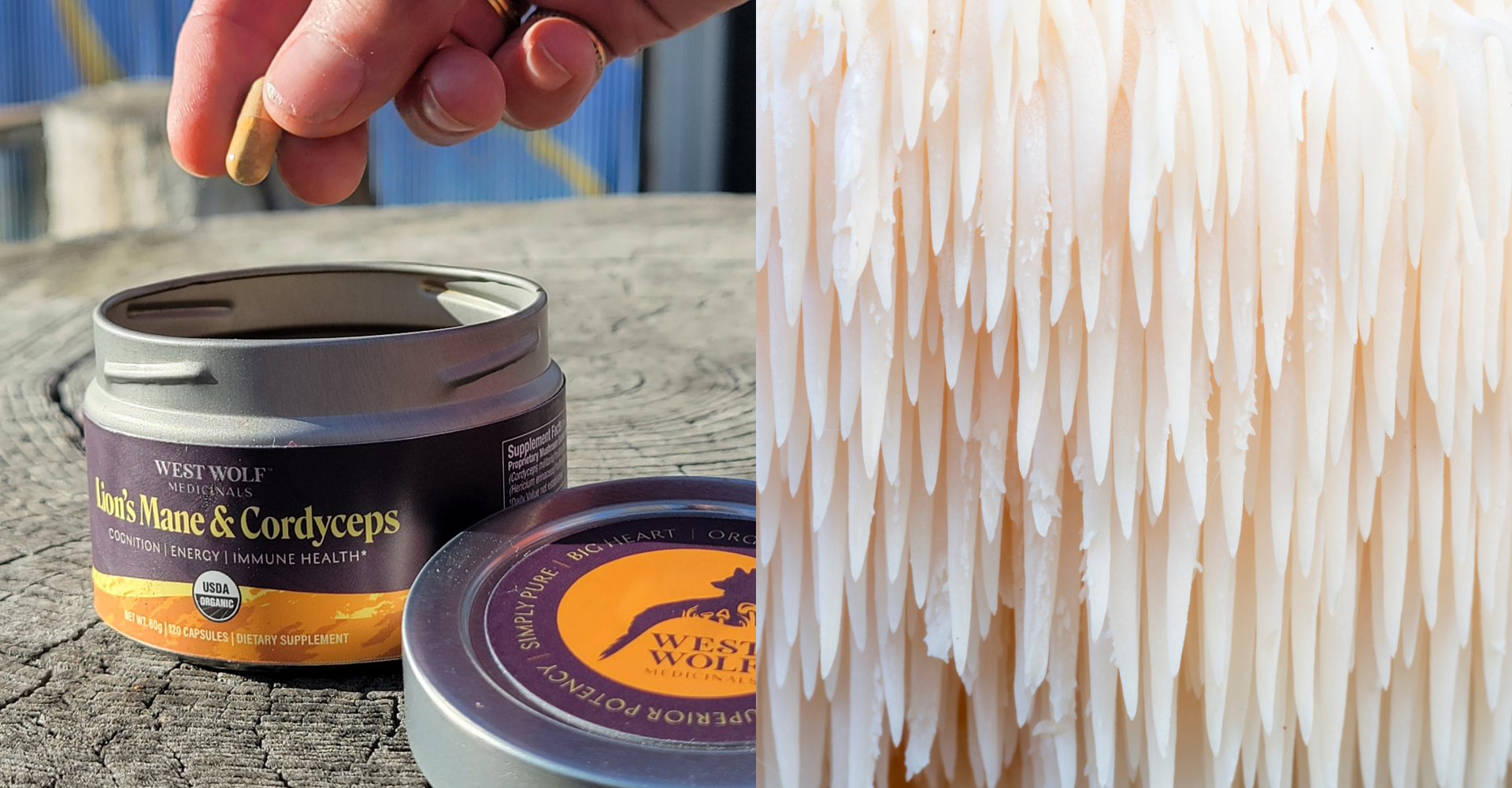
So, make a friend with a medicinal mushroom. Maybe it's Lion’s Mane with its long history of use in Asia for concentration and memory support, or maybe it's another one backed by modern science. All I know is that adding a pure medicinal mushroom extract to your daily wellness routine is one of the easiest — and smartest — steps you can take for your health. Just a simple 500mg dose with your favorite morning beverage can
boost your immune system and ease inflammation, setting a positive tone for your whole day. Even better, it’s supporting long-term brain health by protecting your valuable neurons. Just make sure you’re choosing a trusted brand that uses
100% fruiting bodies and backs their product with
third-party lab testing — because your brain deserves the best.
See how West Wolf offers the most powerful supplements on the market: organically certified, pure fruiting bodies, extracted to a high potency, 3rd party tested, and made on our farm in Colorado.
Shop Lion's Mane mushrooms online now!